Can Termidor Treat Termites Behind Hollow-Sounding Wood? A Florida Homeowner's Guide
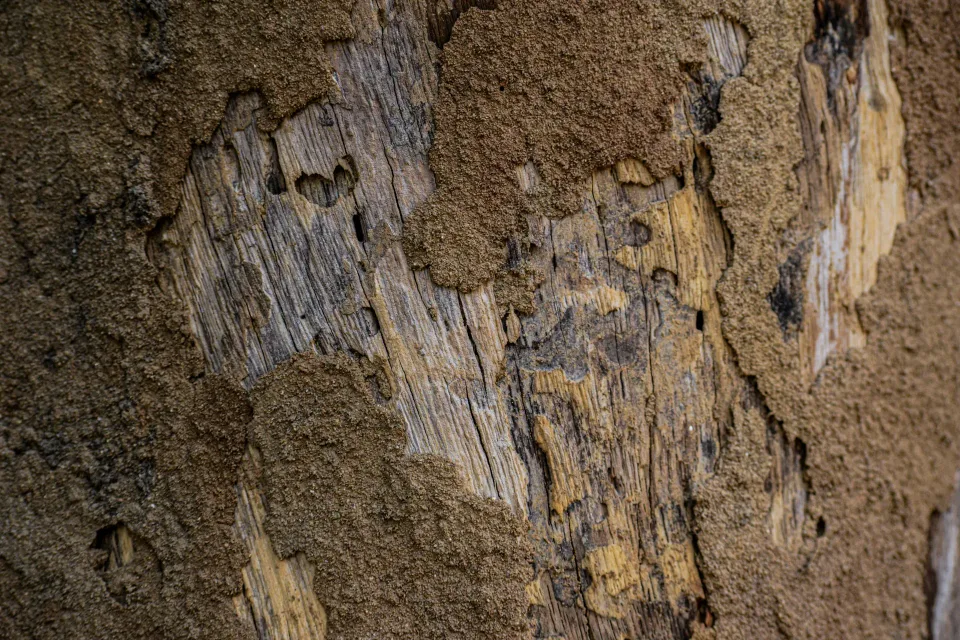
Can Termidor Reach Termites Hiding in Hollow Wood?
At Florida Pest Pros, we check moisture readings and wood damage together so the treatment plan matches what is actually behind the surface.
Subterranean Termites or Drywood Termites Which One Hollowed Out That Frame?
You tap a baseboard near your front door and it sounds like cardboard. That hollow note means workers have been tunneling inside the wood for months, and the question every Florida homeowner asks next is whether a liquid termiticide can fix it.
This distinction changes everything about your treatment. We identify the species first because applying the wrong product wastes money and leaves the colony intact.
How Does a Moisture Meter Change the Diagnosis?
Before we recommend anything, we run a moisture meter across the wood near the hollow spot. Readings above normal range tell us water is feeding the problem a leaking slab penetration, a damp crawlspace, or siding that never dries after our rainy season downpours. If the meter shows damp framing, fixing the moisture source is part of the treatment, not an optional extra.
When Should You Call a Pro Instead of Treating It Yourself?
Call a pro when the hollow sound covers more than one spot. A single soft window sill might be a candidate for a small spot treatment, but hollow doorframes plus discarded wings near windowsills plus frass piles mean an active colony. A licensed operator can also tell you whether preventive treatment versus curative treatment makes sense preventive barriers cost less than repairing structural damage later.
What Does a Termite Bond or Pretreatment Document Cover?
Two paperwork items matter here. A termite bond is an annual renewal agreement that covers re-inspections and retreatment if activity returns, while a one-time treatment ends when the technician leaves the termite bond versus one-time treatment decision comes down to Florida’s year-round termite pressure and your tolerance for risk.
If your home was built with a preconstruction termite treatment, the builder’s pretreatment documentation may still affect warranty coverage, so dig out those papers before paying for duplicate work. We review both documents during the first visit.
How We Plan the Treatment Around Your Home
Homes near Paynes Prairie Preserve State Park sit on sandy soil that drains fast, which actually helps a liquid barrier set properly. If you are weighing repair versus replacement for that damaged frame, our guide on hollow-sounding doorframes breaks it down, and our subterranean termite treatment page explains the full process.
Termite Treatment Options Compared for Florida Homes
An inspection identifies the activity; treatment targets the pests the inspection found you need both, in that order. Here is how the main options stack up:
| Option | Best for | Key detail |
|---|---|---|
| Liquid soil treatment | Subterranean colonies around slab or crawlspace homes | Creates a treated perimeter barrier; trenches follow label-directed dimensions |
| Termite baiting and monitoring | Homes where digging near roots, wells, or patios is impractical | In-ground stations checked on a schedule; slower but less disruptive |
| Drywood spot treatment | One or two infested frames or sills | Localized injection or wood treatment; no tenting required |
| Whole-structure fumigation | Widespread drywood activity behind walls | Tenting covers the entire structure; residents vacate during the process |
Liquid soil treatment and baiting solve the same subterranean problem differently one is a perimeter barrier applied once, the other uses monitored stations that catch activity early. Ask any company for product label and safety data access before signing; the EPA-registered label tells you exactly where the product may legally be applied. We also leave termite conducive-condition notes gutter leaks, wood-to-soil contact, dense mulch so you know what to fix to keep the treatment working.
How Do You Prepare for a Termite Treatment Appointment?
A homeowner in Gainesville called us after hearing hollowness in a hallway doorframe; here is exactly how that appointment runs and what she did beforehand. A wood destroying organism inspection comes first, then the treatment plan, then the work itself.
-
Clear the inspection areas: Move stored items away from baseboards, the attic hatch, and the perimeter so we can see foundation walls and check wood moisture.
-
Disclose prior treatments: Tell us about any past termite warranties or treatments old product in the soil changes where we drill and trench.
-
Mark utility lines: Identify plumbing and irrigation lines before any drilling; slab penetrations commonly use ½-inch holes and we do not want to hit a pipe.
-
Plan for reentry: Follow product-label reentry and ventilation instructions, and keep children and pets away during application.
-
Schedule monitoring: Arrange follow-up visits for bait-station checks if your plan includes monitoring stations.
Drywood termite swarms often follow warm, humid weather, so book the inspection soon after you see wings and remember that high humidity can promote mold and wood decay that mimics termite damage. Ask your technician for the treatment map before they leave.
Common questions about Pest Control in Florida
Can Termidor treat termites inside a hollow-sounding doorframe, or only the soil?
We combine both on the same visit when inspection confirms subterranean activity.
How much does a termite inspection cost in
Gainesville before treating hollow wood?
A termite inspection typically runs $75–$150, depending on your home size and inspection scope. That inspection determines whether you need subterranean treatment, which generally falls between $500 and $2,500 based on foundation access and method. We quote only after the inspection, never before.
Should I spray store-bought termite killer on the hollow doorframe myself?
Call Florida Pest Pros for an inspection before spending money on products that cannot solve the problem.
Does Florida law require a licensed company for termite treatment?
Yes Florida Statutes Chapter 482 governs structural pest control licensing, and Chapter 5E-14 of the Florida Administrative Code sets the operating rules. Termiticides are restricted-use products requiring Florida pesticide applicator certification, and treatments must follow the EPA-registered label. Any WDO inspection should produce the FDACS-13645 report through the Florida Department of Agriculture and Consumer Services.
I found frass piles and hollow wood do I need drywood termite treatment or just an inspection?
Florida Pest Pros can walk you through both options after the inspection.
Ready to Get Answers About That Hollow-Sounding Wood?
Hollow wood is a symptom, not the whole problem. With more than 20 termite species established in this state and warm temperatures supporting year-round termite pressure, waiting rarely makes the bill smaller.
Keep treatment areas clear of stored items so the crew can work efficiently, and expect a written report, not just a handshake. Florida Pest Pros is a Florida Department of Agriculture and Consumer Services–licensed pest control operator, and we explain every finding in plain language before we treat.
Call us at (855) 681-0299 or visit our termite inspection page to book an assessment for your home.
Pest Control FAQs in Gainesville, FL
Can Termidor treat termites inside a hollow-sounding doorframe, or only the soil?
We combine both on the same visit when inspection confirms subterranean activity.
How much does a termite inspection cost in Gainesville before treating hollow wood?
A termite inspection typically runs $75–$150, depending on your home size and inspection scope. That inspection determines whether you need subterranean treatment, which generally falls between $500 and $2,500 based on foundation access and method. We quote only after the inspection, never before.
Should I spray store-bought termite killer on the hollow doorframe myself?
Call Florida Pest Pros for an inspection before spending money on products that cannot solve the problem.
Does Florida law require a licensed company for termite treatment?
Yes Florida Statutes Chapter 482 governs structural pest control licensing, and Chapter 5E-14 of the Florida Administrative Code sets the operating rules. Termiticides are restricted-use products requiring Florida pesticide applicator certification, and treatments must follow the EPA-registered label. Any WDO inspection should produce the FDACS-13645 report through the Florida Department of Agriculture and Consumer Services.
I found frass piles and hollow wood do I need drywood termite treatment or just an inspection?
Florida Pest Pros can walk you through both options after the inspection.
Service Areas in Florida
Select a city to find local pest control providers we cover in Florida.
Discuss Pest Control in Florida
Share your job scope for pest control in Florida — we will review fit and pricing before scheduling.